A bathtub reglazing and surface restoration contractor needed one system to manage jobs, properties, technicians, and billing. We built it, and it has been in daily production ever since.

80,638
Jobs processed
4,378
Properties managed
7
Years in continuous production
60
Active technicians
Built in 2019 and still in active daily use. Everglaze remains a client.
Field service work generates a paper trail at every step. A job gets scheduled, a technician gets assigned, photos get taken before and after, an invoice goes out, and a warranty claim can come back two years later with someone needing to prove what was done.
Everglaze was running all of it on Microsoft Calendar and email. Job status lived in whoever had last touched it. Photos sat on technicians' phones. Finding the service history on a property meant asking around and hoping someone remembered.
The bottleneck was never the field work. It was knowing what had been done, by whom, and whether it had been paid for.
"We were running a business this size out of a calendar and an inbox. Seven years later every job, every property, and every photo is in one place, and I can answer any question a client asks me in about ten seconds. It runs the company."
Sean Marsh
Owner, Everglaze Coatings
| Metric | Before | After |
|---|---|---|
| Job scheduling | Microsoft Calendar | Centralized job queue with full filtering |
| Job history | Email threads | 80,638 jobs on permanent record |
| Property records | Ad hoc | 4,378 properties with full service history |
| Field photos | On technician phones | Attached to the job record permanently |
| Invoicing | Manual, separate | Linked to jobs with balance tracking |
| Change tracking | None | Full audit log with user and timestamp |
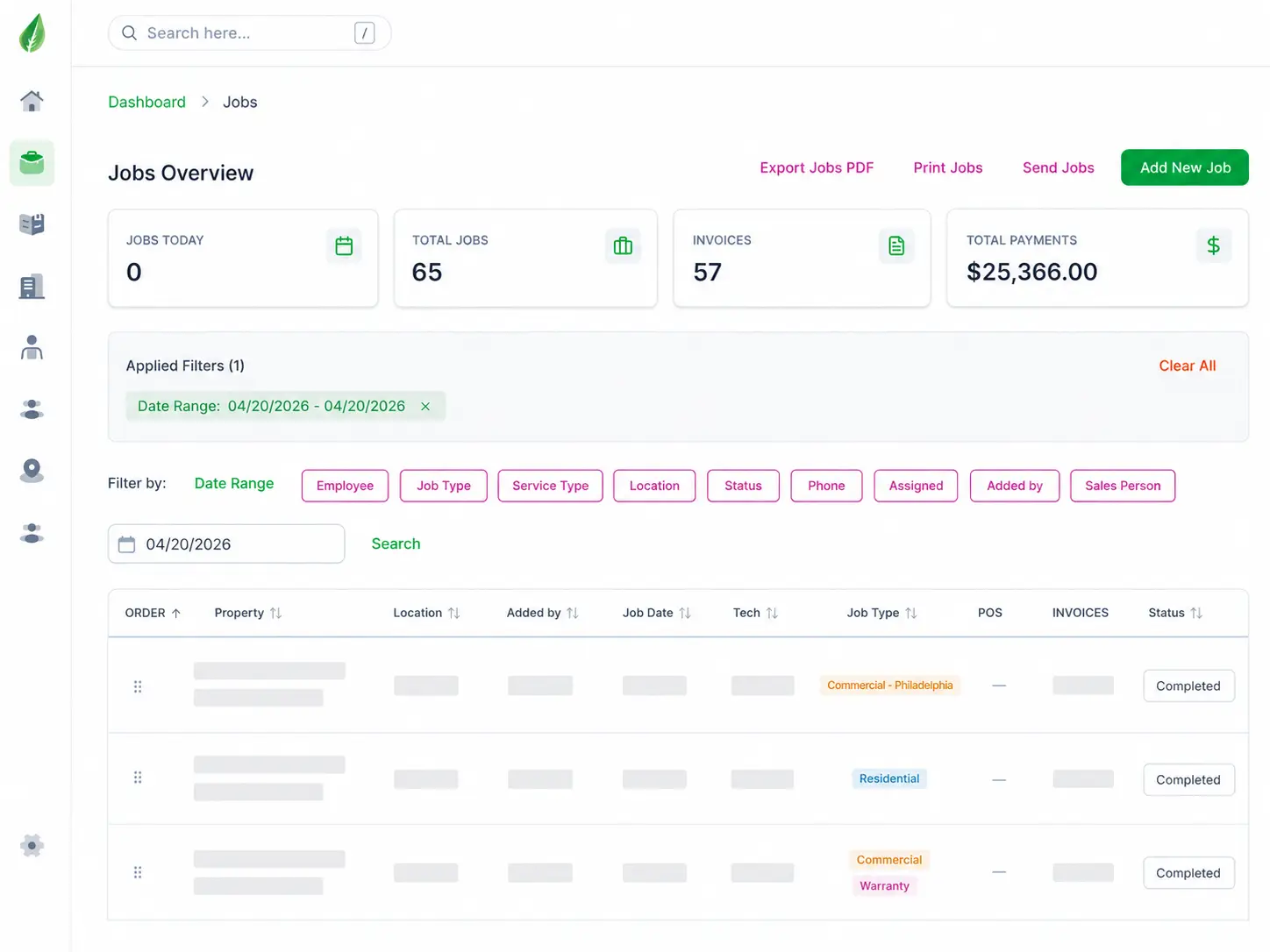
Every job in one queue with status, assigned technician, job type, service location, and linked invoice. Filterable by employee, job type, service type, location, status, date range, and assigned staff. Sortable on every column, exportable to PDF, printable, and sendable directly from the list view.
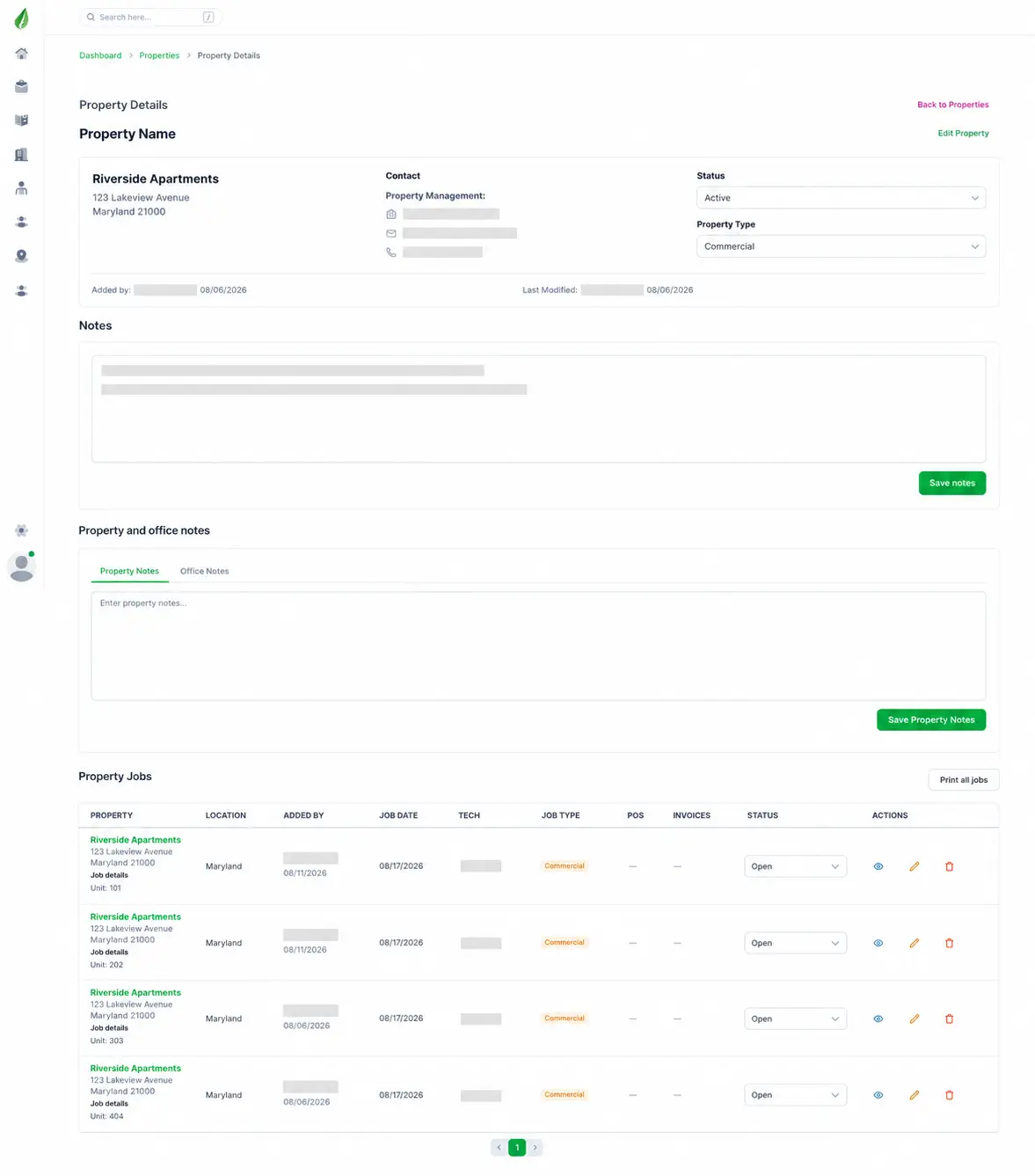
Each property holds its full service history, so any new job pulls up everything performed at that address before it. Unit-level detail supports multi-unit properties, and property notes persist across every future visit.
Jobs are assigned to technicians who work them from the field, uploading before and after photos directly to the job record. That photo evidence stays attached permanently, which is what makes a warranty claim resolvable years after the work.
Jobs can be flagged as warranty work and tracked separately from standard commercial and residential jobs, so warranty volume stays visible rather than buried inside general job counts.
Invoices are created against jobs with total, paid amount, balance, and status tracked per invoice, plus purchase order records attached to the same job. The dashboard surfaces job counts, invoice counts, and total payments at a glance.
Notes are segmented into property, technician, and office channels, so field instructions, internal notes, and property-specific requirements stay separate rather than collapsing into one shared field. User management controls who can see and edit what.
Every change is logged with timestamp, user, action, originating IP address, and field-level detail showing exactly what changed and what it changed from, including status transitions and technician reassignments.
Dashboard totals surface job counts, invoice counts, and payments at a glance, and any filtered view of the job list can be exported to PDF, printed, or sent directly from the platform. Reports reflect whatever filter is applied, so a property, a technician, or a date range can be pulled on demand.
Field service work gets disputed. A property manager asks what was done. A warranty claim arrives two years after the job. A payment gets questioned. The platform answers all of it from the record: who was assigned, when the status changed, who changed it, what the technician photographed before and after, and what was invoiced. That traceability was a requirement from the first build, not something bolted on later.
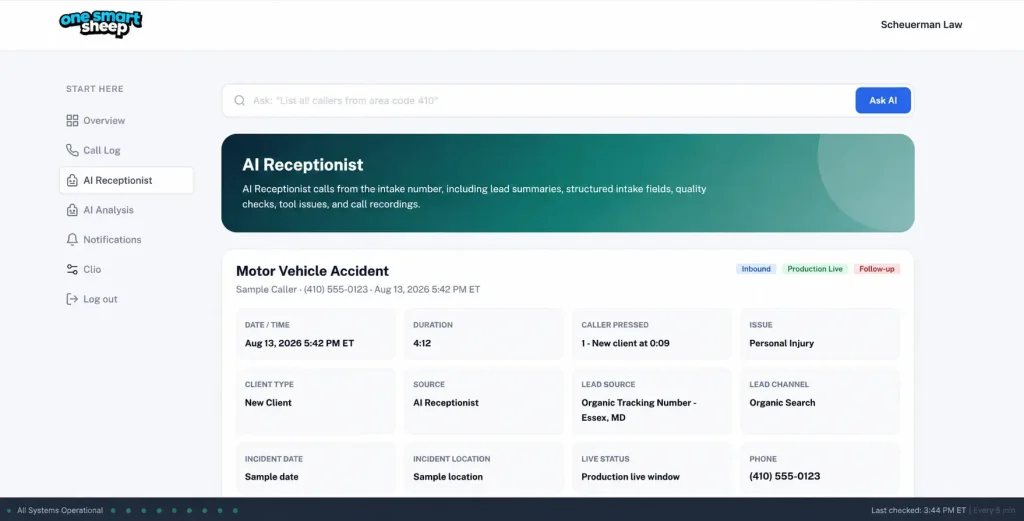
A secure AI Receptionist for a Maryland law firm, turning after-hours calls into structured legal intake, lead records, live-transfer attempts, scheduling fallbacks, and team notifications.
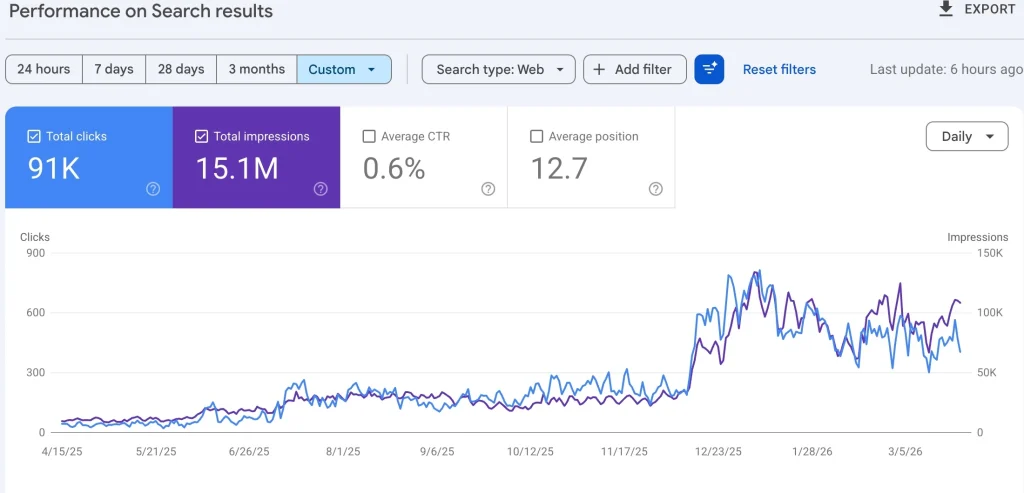
A programmatic SEO system for a Maryland healthcare business, using automated service pages, blog workflows, internal linking, and Search Console feedback to grow organic visibility.
Every engagement starts with a conversation about how your operation actually runs. No pitch deck, no pressure.